12 Sage Green Kitchen Decor Ideas That Look Soft And Curated
Sage green shows up in kitchens mostly as a paint color, which skips the easier part — the stuff sitting on the counter.
This is 12 real ways to bring sage green into a kitchen, from a stand mixer to a full cabinet swap, no full renovation required unless you actually want one.
Skip the trend pieces that only work in a showroom kitchen.
First up: the counter that’s usually the most boring spot in the room.
Style a Sage Green Stand Mixer
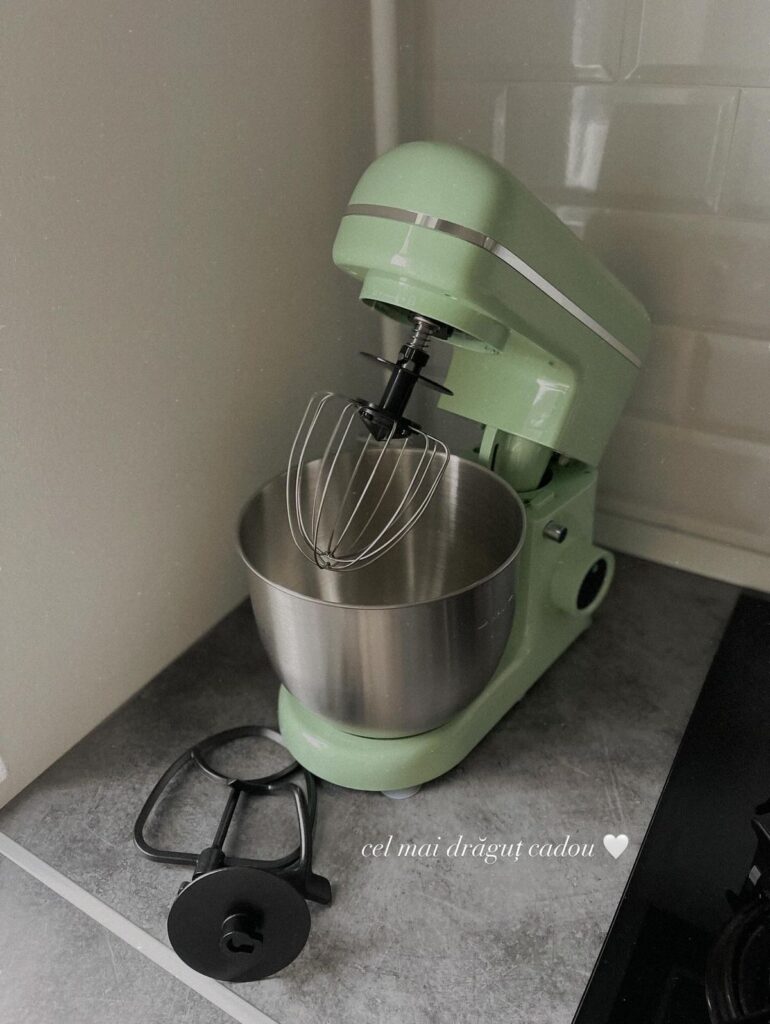
Most kitchen appliances get shoved in a cabinet the second they’re done being used.
A stand mixer is supposed to earn counter space instead.
A sage version turns into the centerpiece a bare stretch of counter needs, not another white appliance blending into the backsplash.
Shop: “sage green stand mixer” here
Swap in Sage Green Kitchen Tools
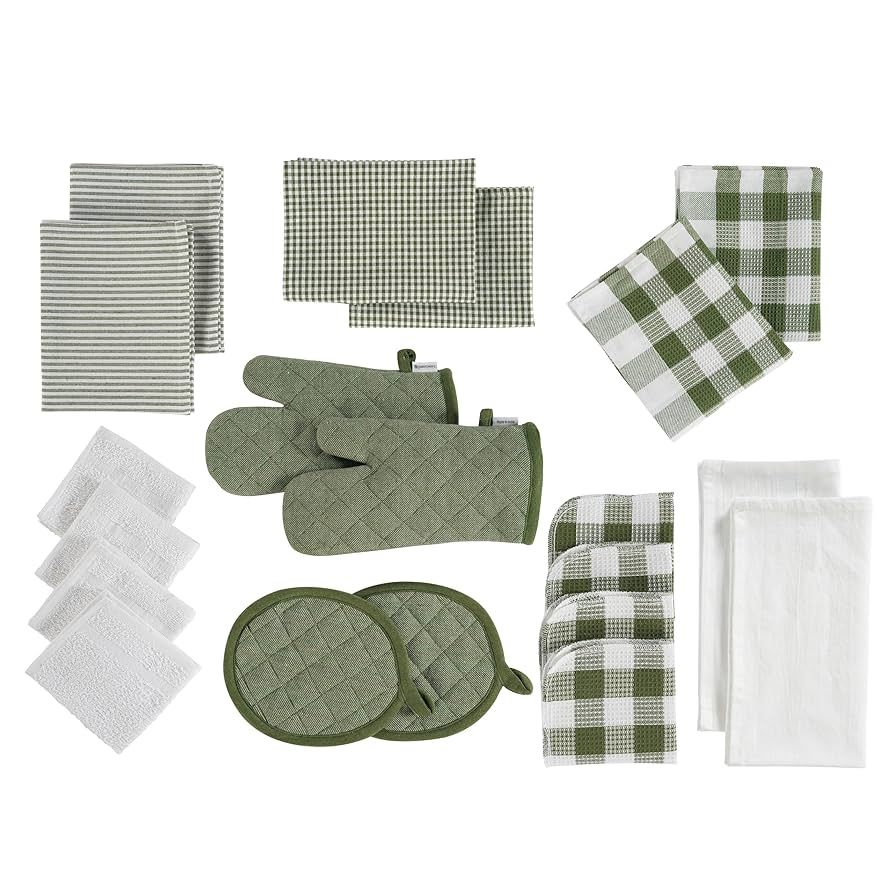
Utensil crock, colander, dish rack — small stuff, easy to swap one at a time.
None of it needs a remodel or a new color scheme, just the plain white or stainless versions replaced whenever they’d get replaced anyway.
A sage crock sitting next to the stove reads intentional in a way a mismatched drawer full of tools never does.
Cheapest heading on this whole list to actually pull off, and the easiest one to test the color with before committing anywhere bigger.
Start with whatever’s already closest to breaking — that’s usually the dish rack or the utensil holder, not the good knives.
Shop: “sage green kitchen utensil crock” here
Add Cream Ceramics and Woven Baskets
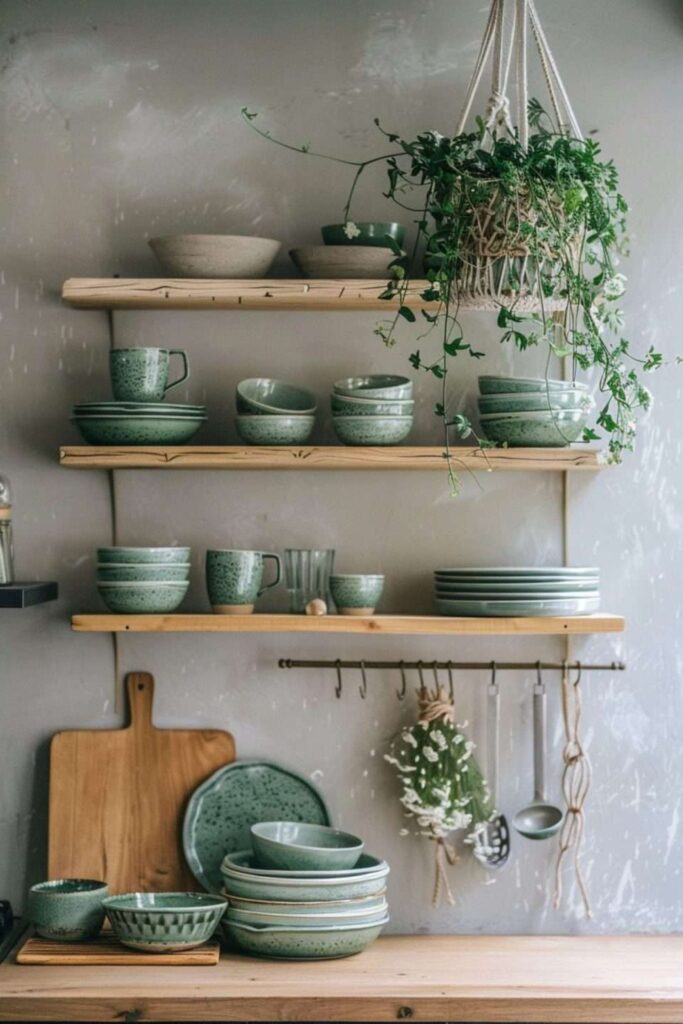
Sage shelves start looking flat fast once everything on them is the same shade of green.
Cream bowls and a woven basket give the eye somewhere to land.
Wood, ceramic, and woven texture together do more than a second green item ever would.
Shop: “cream ceramic bowls set” here
Anchor the Space with a Sage Green Rug
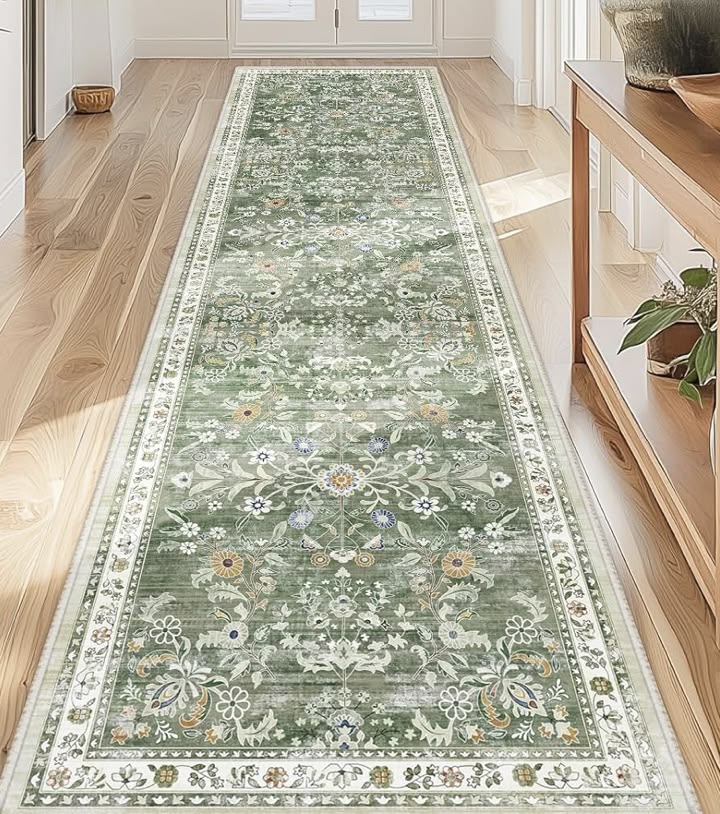
A runner near the sink pulls sage green down to the floor instead of leaving it stuck on shelves and counters.
It doesn’t need to be the exact same shade — a few tones lighter or darker still reads as part of the same palette.
Machine washable matters more here than anywhere else on this list, since it’s sitting right where spills actually happen.
Skip anything that says spot-clean only if it’s going near the stove or sink.
A patterned sage rug hides daily wear better than a solid one — worth factoring in before picking a plain color to match everything else exactly.
Shop: “sage green kitchen runner rug” here
Paint the Lower Cabinets Sage Green
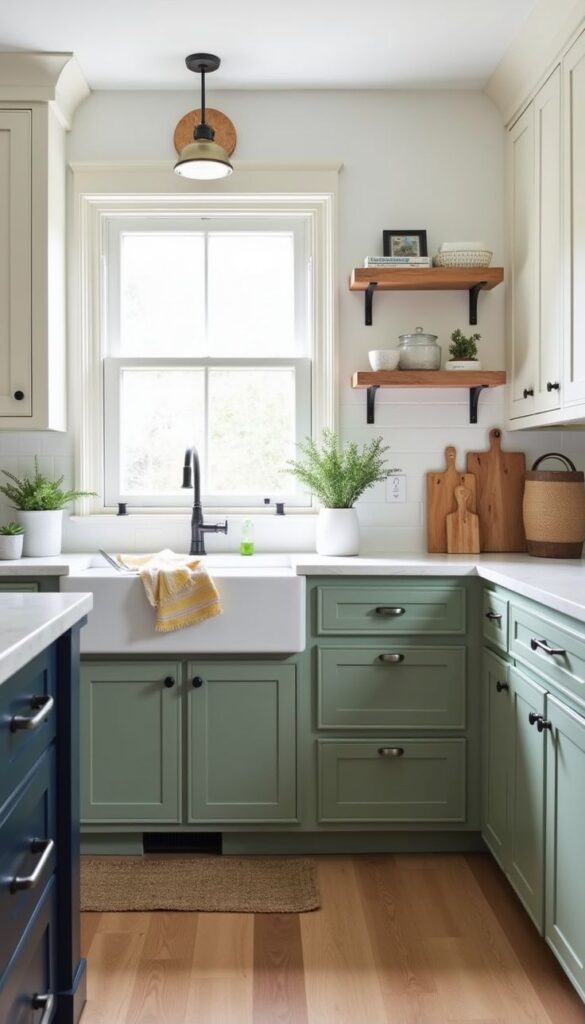
Two-tone cabinets — sage on the bottom, white or cream up top — have been the standard green-kitchen move for a couple years now.
It costs less than painting the whole kitchen and commits to less color overall.
Most people testing sage before going all-in start with just the lower half, then decide later whether the uppers need it too.
Shop: “sage green cabinet paint” here
Add a Sage Green Tile Backsplash
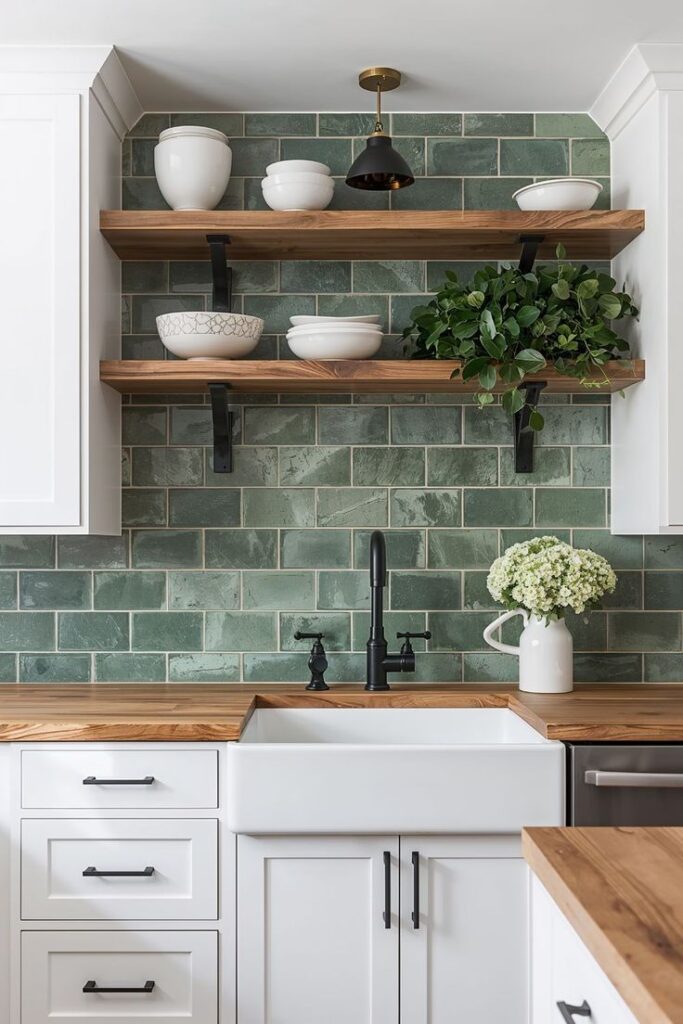
White subway tile is still the default pick for a backsplash, even in a kitchen that’s already gone sage everywhere else.
Sage tile finishes the color instead of stopping it partway up the wall, so the room doesn’t read half-committed.
Herringbone or straight-lay both work — the color is doing most of the job either way, not the pattern.
Grout color matters more than people expect here; too-white grout can make the whole wall look busier than intended.
Shop: “sage green subway tile” here
Paint a Sage Green Accent Wall
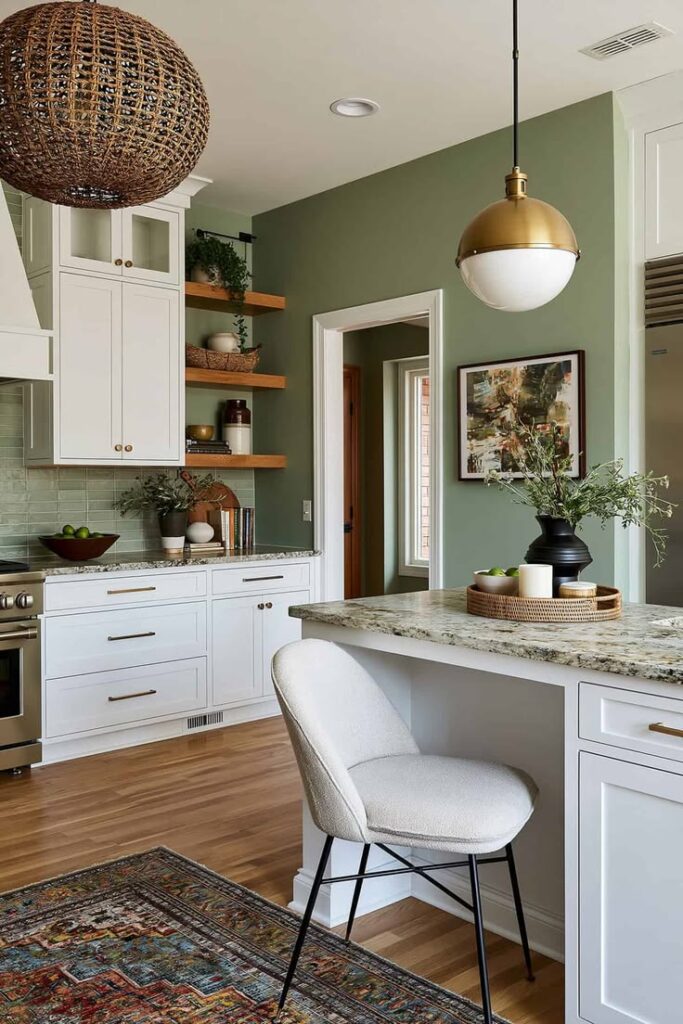
What’s the one wall in the kitchen doing nothing — no cabinets, no tile, just paint?
That’s usually the wall worth going sage on instead of committing the whole room to it.
A single wall near a window catches enough natural light to keep a deeper sage from feeling heavy.
Repaintable in a weekend if it doesn’t end up working, which makes it one of the lower-risk moves on this list.
Shop: “sage green wall paint” here
Style a Sage Green Coffee Corner
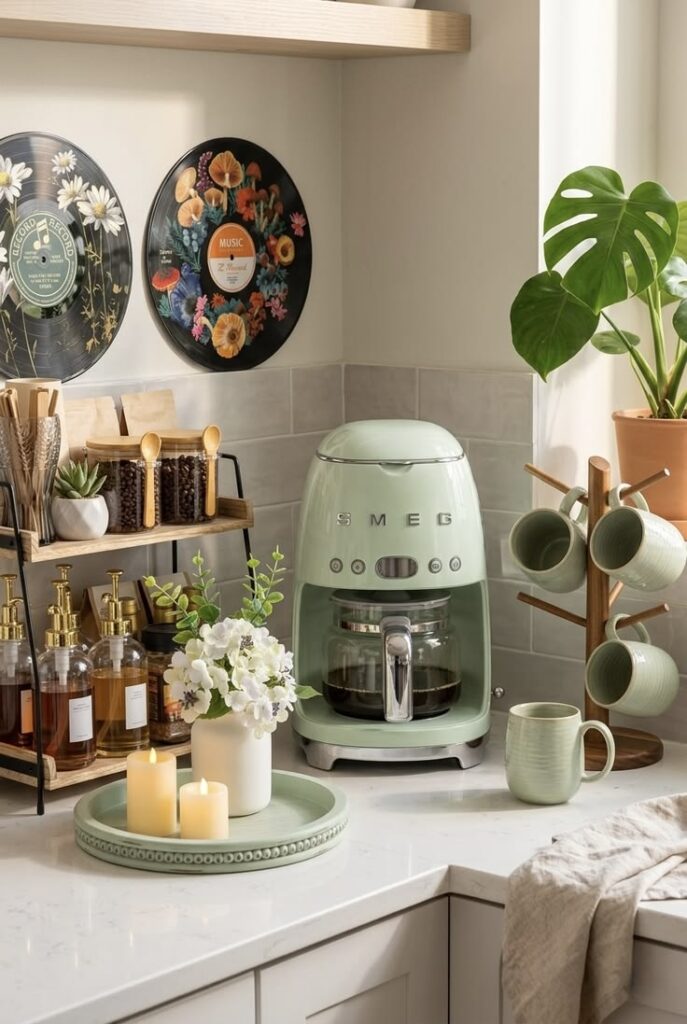
Coffee corners have basically become their own decorating category at this point — not just a machine, a whole styled zone with its own shelf and mug display.
Sage appliances make that easier since the color already ties the zone together without much extra styling required.
One corner of counter with an outlet is really all it needs to start.
The rest — mugs, a tray, a small plant — can get added slowly instead of all at once.
Shop: “sage green coffee maker” here
Use Sage Green Plates and Mugs
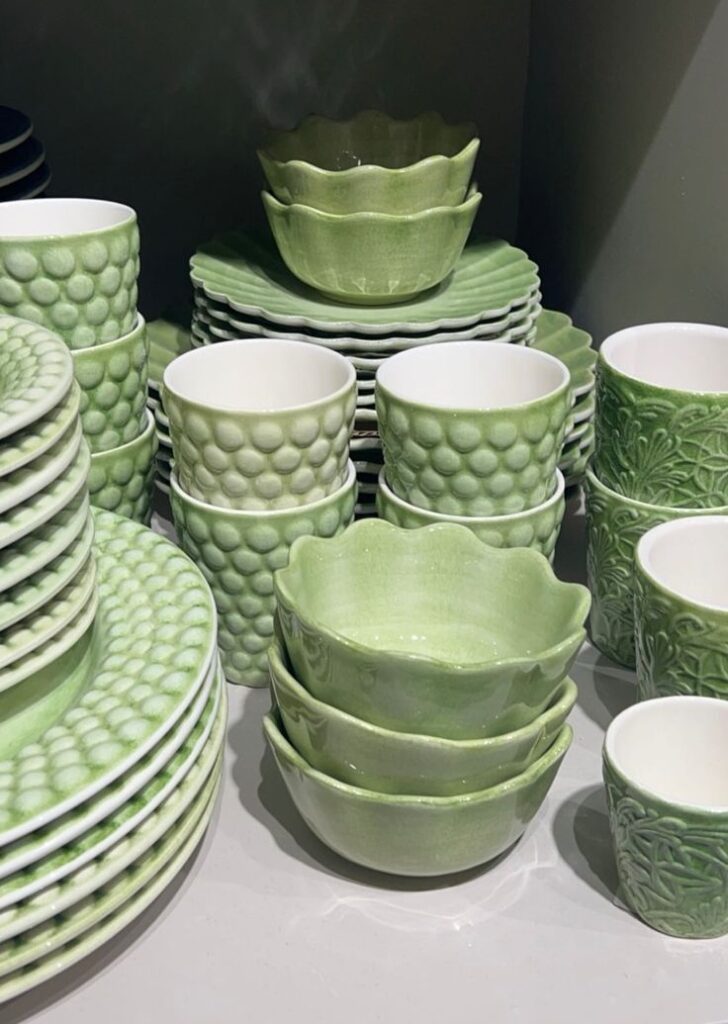
Skip a solid stack of identical sage plates, all the same shape and glaze.
Mixing a couple different textures or finishes in the same color family reads more collected than a matching set does.
A full set bought all at once from one store usually ends up looking the flattest option on the shelf, even in a good color.
Thrifted or mismatched pieces in the same shade do more for the shelf than anything bought as a set.
Shop: “sage green ceramic dinnerware set” here
Use Sage Green Jars for Pantry Storage
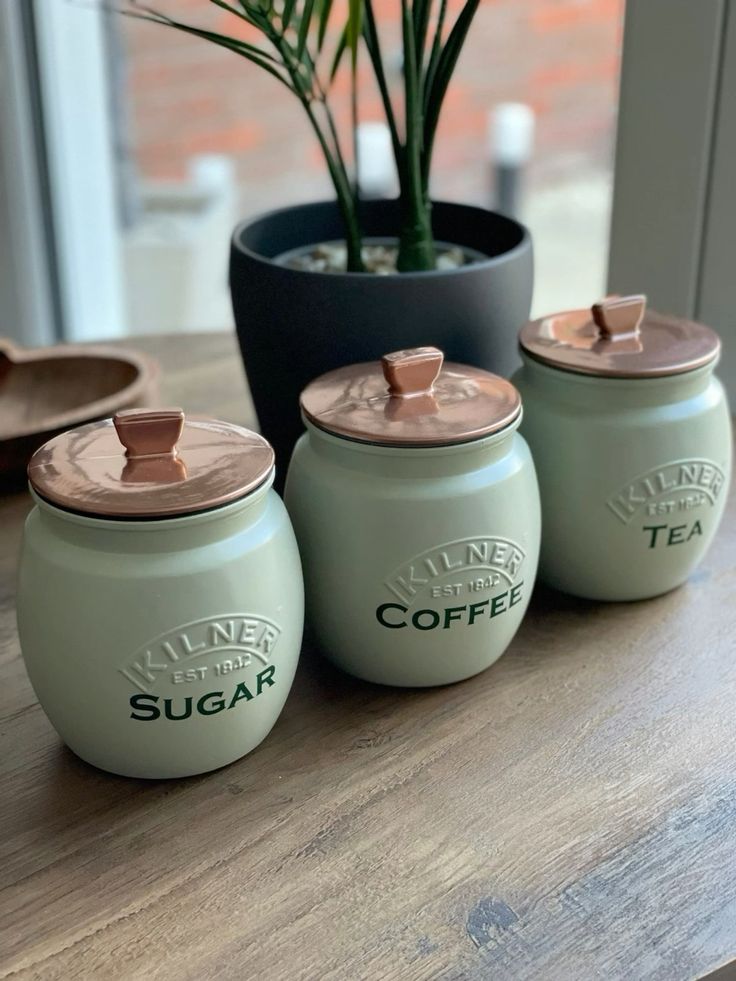
Labeled jars — sugar, flour, coffee — are a small thing, but they’re the kind that actually gets used daily instead of just sitting there for photos.
Glass or ceramic both work, sage lids or full sage bodies, whichever’s easier to find.
Refilling takes a few seconds longer than pouring straight from the bag, and that’s really the only tradeoff involved.
A matched trio on the counter reads more finished than three random containers ever will.
Shop: “sage green kitchen canister set” here
Use a Sage Green Basket for Counter Storage
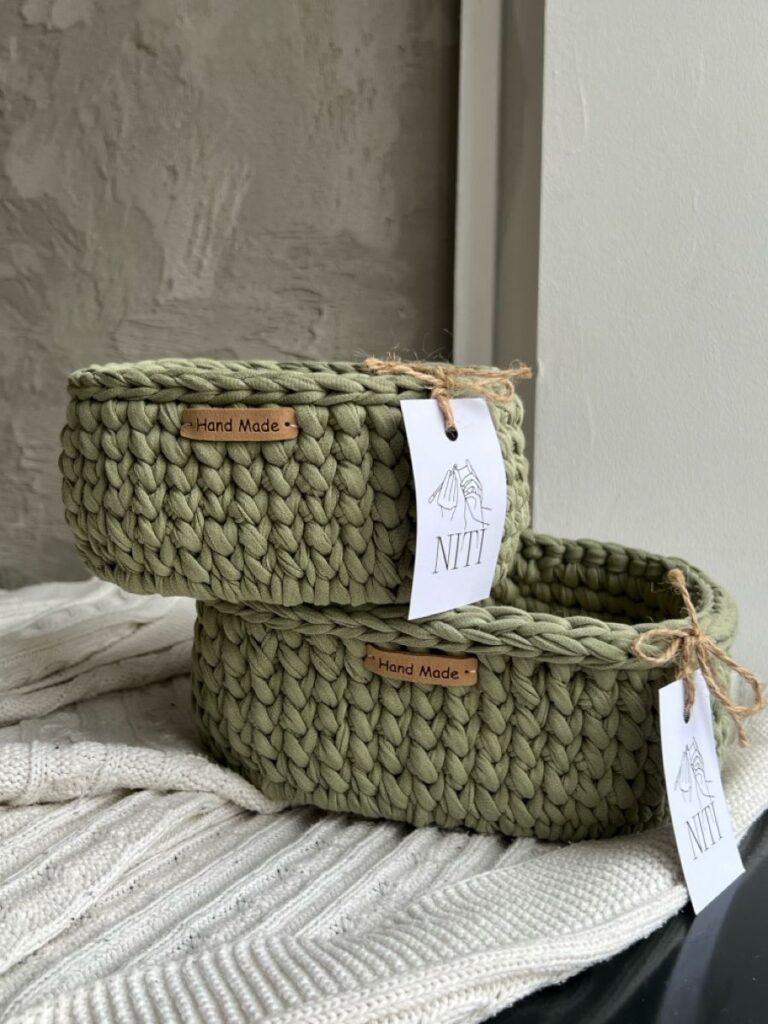
No extra drawer, no cabinet space needed — a basket just sits on the counter and handles whatever doesn’t have a home yet.
Bread, mail, spare dish towels, anything that usually ends up scattered across the counter by Wednesday.
Handmade or tightly woven ones hold their shape longer than the flimsy store-bought kind.
One basket is usually enough — two starts looking like storage instead of styling.
Shop: “sage green woven storage basket” here
Add a Statement Plant to a Sage Kitchen
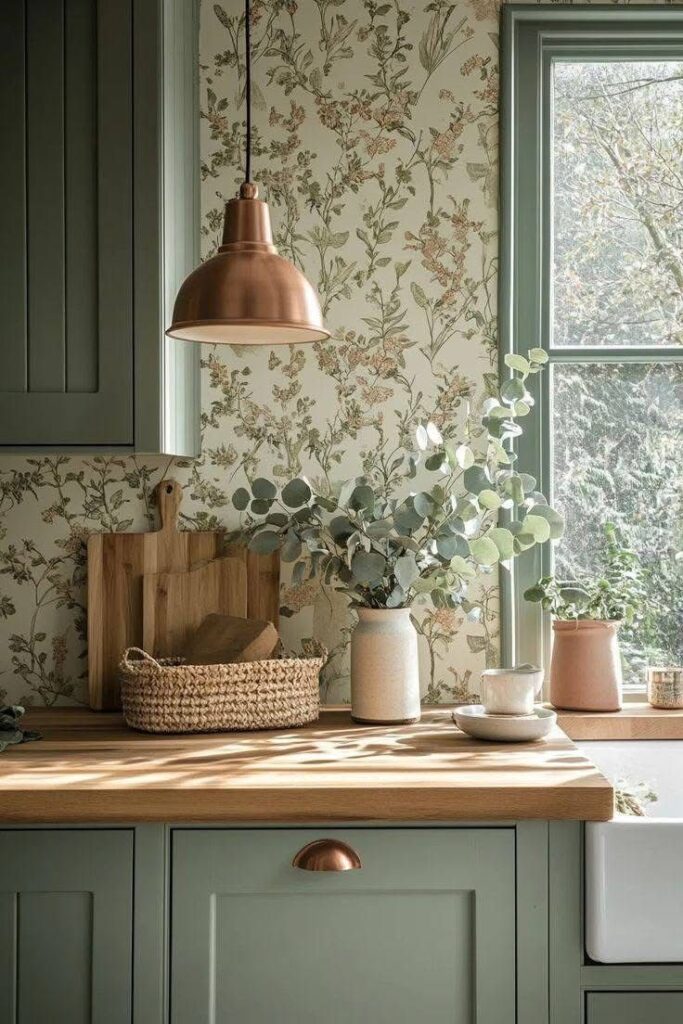
Eucalyptus is the go-to for a reason — it holds its color and shape without the water needing changed every other day.
One tall vase near a window does more for the space than a shelf full of smaller plants would.
Real eucalyptus dries out and keeps its shape for weeks even without fresh water, so it’s more forgiving than most kitchen plants.
Fake works fine too, if the real thing isn’t going to get watered regularly.
Shop: “eucalyptus stems for vase” here
None of this needs to happen at once.
Start with whatever’s easiest — swap the utensil crock, add a plant, see how the color feels in the space before painting anything.
Sage green either grows on someone fast or it doesn’t, and the low-commitment stuff is the quickest way to find out which one’s true here.
You may also like:
10 Coffee Station Ideas For Your Kitchen That Look Incredibly Stylish
10 Best Lemon Kitchen Decor Ideas For A Fresh And Sunny Home